
Working Holiday Visa vs Skilled Migration: Different Paths Explained
Compare Working Holiday Visa vs Skilled Migration in Australia. Learn eligibility, work rights, PR pathways, and choose the visa that suits your goals.
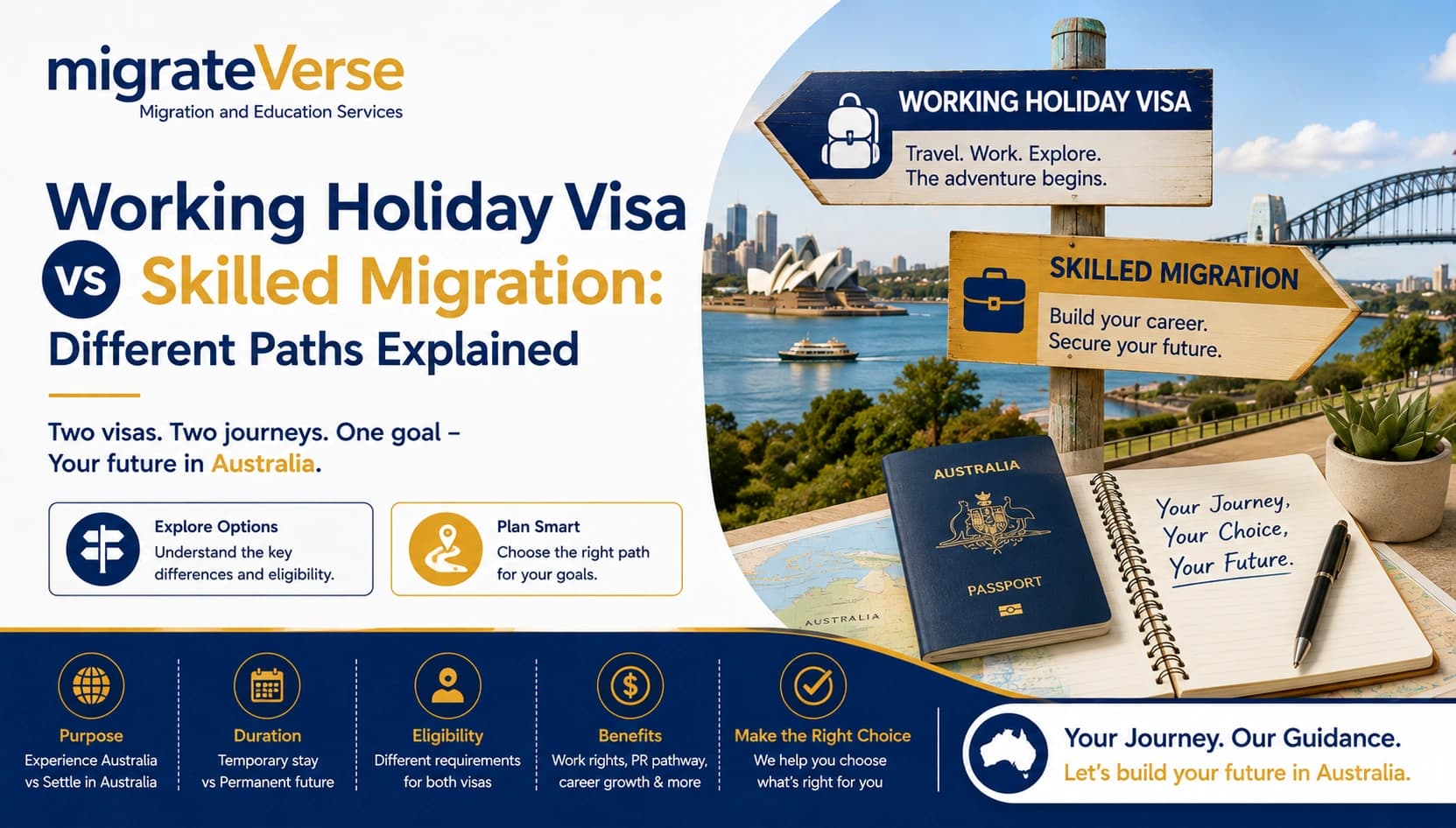
If you've been researching Australian visas recently, you've probably compared Working Holiday Visa vs Skilled Migration at least once. It's a common question, especially among people who want to work in Australia but aren't sure which pathway matches their long-term goals.
At first glance, both visas allow you to live and work in Australia, so they can seem quite similar. Once you look a little closer, though, the differences become obvious. One is designed for short-term travel and work experiences, while the other is aimed at professionals planning a long-term future in Australia. Choosing the right pathway early can save you time, money, and unnecessary disappointment later.
Understanding Australia's Immigration Pathways
Different Visas for Different Goals
Australia offers several Australia Immigration Pathways, and each one has a specific purpose. Some visas help international students continue their education, others support employer sponsorship, while some focus on skilled professionals who can contribute to Australia's workforce.
The Working Holiday Visa Australia and Skilled Migration Australia programs are two of the most popular options, but they're created for completely different applicants.
The biggest mistake many people make is choosing a visa simply because someone they know applied for it successfully. Immigration decisions should never be based on another person's journey because everyone's qualifications, age, work experience, and career plans are different. Taking time to understand each pathway usually leads to much better decisions.
What Is a Working Holiday Visa Australia?
A Visa Designed for Travel and Work
The Working Holiday Visa Australia allows eligible young adults from participating countries to travel around Australia while supporting themselves through temporary employment. For many people, it's the perfect opportunity to experience Australian culture, improve English skills, explore different cities, and earn income during their stay.
Unlike permanent migration programs, this visa isn't primarily designed as a pathway to long-term settlement. Instead, it focuses on cultural exchange and temporary work opportunities.
Many travellers spend time working in hospitality, tourism, agriculture, retail, and seasonal industries while exploring different parts of the country. Some extend their stay by meeting additional visa requirements, while others return home after completing their Australian adventure.
For people who dream of combining travel with work, this visa offers flexibility that few other pathways provide.
What Is Skilled Migration Australia?
A Long-Term Career and Migration Pathway
Skilled Migration Australia is designed for qualified professionals whose occupations are needed in the Australian labour market. Instead of focusing on short-term travel, this pathway aims to attract individuals with recognised qualifications, relevant work experience, and skills that contribute to Australia's economy.
Applicants usually need to satisfy several requirements, including occupation eligibility, skills assessment, English language proficiency, and, in many cases, a points-based assessment. Depending on the visa pathway, applicants may also require state nomination or employer sponsorship.
For professionals planning to build long-term careers, purchase property, or eventually apply for permanent residency, skilled migration often provides a more suitable pathway than temporary working holiday options.
Working Holiday Visa vs Skilled Migration: The Biggest Differences
Purpose and Long-Term Goals
The most important difference between these two pathways is the purpose behind them. A Working Holiday Visa Australia is designed for short-term travel combined with temporary employment. It gives eligible applicants the chance to experience life in Australia while working to support their travels. For many people, it's an adventure first and a career opportunity second.
Skilled Migration Australia, however, is centred on long-term employment and addressing workforce shortages. Applicants usually move with a clear career plan rather than simply exploring the country. Many skilled migration pathways also provide opportunities that may eventually lead to permanent residency, making them attractive for professionals planning to settle in Australia.
Neither pathway is better than the other. The right choice depends entirely on your personal goals. Someone taking a gap year after university will likely have different priorities from an experienced engineer planning to relocate with their family.
Eligibility Requirements Are Very Different
Qualifications Matter More in Skilled Migration
One of the biggest differences appears during the eligibility stage. The Working Holiday Visa Australia mainly focuses on age, nationality, health, and basic visa requirements. Professional qualifications are generally not the deciding factor because the visa isn't intended specifically for skilled employment.
Skilled migration is much more detailed. Applicants usually need recognised qualifications, relevant work experience, English language proficiency, and, in many cases, a successful skills assessment. Certain pathways also require applicants to meet minimum points thresholds or receive invitations before lodging their applications.
Because eligibility requirements are more comprehensive, preparing for Skilled Migration Australia often takes longer than applying for a Working Holiday Visa. However, the long-term opportunities available through skilled migration can make the additional preparation worthwhile for many professionals.
Work Rights and Career Opportunities
What Kind of Jobs Can You Expect?
Your work opportunities depend heavily on the visa you choose. People on a Working Holiday Visa Australia usually take temporary jobs in hospitality, tourism, retail, farming, and seasonal industries. These roles provide valuable local experience and help travellers fund their stay while exploring different parts of Australia. Some people even discover career interests they hadn't considered before. Still, the focus remains on short-term employment rather than building a long-term profession.
With Skilled Migration Australia, the situation is quite different. Most applicants move to Australia with the intention of working in their qualified profession. Engineers, accountants, nurses, IT specialists, teachers, and construction professionals often secure positions that match their education and experience. This not only offers greater career stability but also allows professionals to build industry connections that may benefit them for many years. If your goal is long-term career growth, skilled migration usually provides a stronger foundation.
Which Pathway Offers Better Long-Term Opportunities?
Temporary Experience or Permanent Future?
This is probably the biggest question applicants ask. A Working Holiday Visa gives you the freedom to experience Australia, earn income, and travel without making a long-term commitment. It suits people who want adventure, international exposure, and flexibility. Some travellers later decide to explore other visa options, but that isn't the primary purpose of the program.
Skilled migration, however, is designed with long-term settlement in mind. Many skilled visa holders eventually explore permanent residency opportunities after meeting the relevant requirements. Although immigration policies continue to evolve, this pathway generally provides greater stability for professionals who want to build their careers, purchase property, or settle with their families. Before making any decision, it's worth considering where you see yourself five or ten years from now rather than focusing only on your immediate plans.
Cost, Preparation and Application Process
Planning Early Makes the Journey Easier
Every Australian visa involves preparation, but the amount of planning varies considerably. A Working Holiday Visa Australia application is generally more straightforward because eligibility focuses mainly on age, nationality, health, and character requirements. Applicants still need to prepare carefully, but the documentation is often less extensive than skilled migration applications.
Skilled Migration Australia requires much more preparation. Depending on the visa category, applicants may need skills assessments, English language test results, employment references, educational documents, health examinations, and supporting evidence for their points assessment. Gathering these documents can take time, so starting early usually makes the process much less stressful. Rushing through important paperwork often creates avoidable delays.
How to Choose the Right Visa for Your Goals
Think Beyond Your First Year in Australia
The best visa isn't necessarily the easiest one to obtain. It's the one that supports your long-term plans. If your dream is to travel across Australia, experience different jobs, and enjoy a working holiday before returning home, the Working Holiday Visa is likely to suit you better. On the other hand, if you're a qualified professional hoping to establish a long-term career, Australia Immigration Pathways under skilled migration deserve much closer attention.
This is where careful planning becomes valuable. migrateVerse helps applicants understand how different visa pathways align with their qualifications, career goals, and future plans instead of simply recommending the most popular option. Every applicant's circumstances are unique, and choosing the right pathway from the beginning often prevents unnecessary delays and additional expenses later.
Many applicants also find that immigration policies can feel overwhelming because eligibility requirements, occupation lists, and government regulations continue to change. migrateVerse supports individuals by explaining these updates in simple language and helping them prepare stronger applications based on current requirements rather than outdated information found online.
Professional guidance also becomes useful when comparing multiple visa options. Some applicants qualify for more than one pathway but struggle to determine which offers better long-term opportunities. migrateVerse works with applicants to compare available options, understand documentation requirements, and create a migration plan that matches their personal and professional goals.
Whether you're planning a short working holiday or preparing for a permanent move, migrateVerse believes informed decisions always produce better outcomes than rushed applications. Spending extra time understanding your options today can save months of uncertainty later.
Sometimes people focus so much on getting to Australia that they forget to ask an even more important question—what do I want my life to look like once I'm there? Answering that question first often makes choosing the right visa much easier.
Frequently Asked Questions
What is the difference between a Working Holiday Visa and Skilled Migration?
Can a Working Holiday Visa lead to permanent residency?
Is Skilled Migration Australia better than a Working Holiday Visa?
Which visa is easier to apply for?
How do I choose the right Australia immigration pathway?
Need Expert Migration Advice?
Our registered migration agents can help you navigate the complexities of Australian visa processes.