
What Happens If My Australian Visa Is Refused? A Complete Guide
Wondering what happens if your Australian visa is refused? Learn the key refusal reasons, review options, reapplication process and next steps to take.
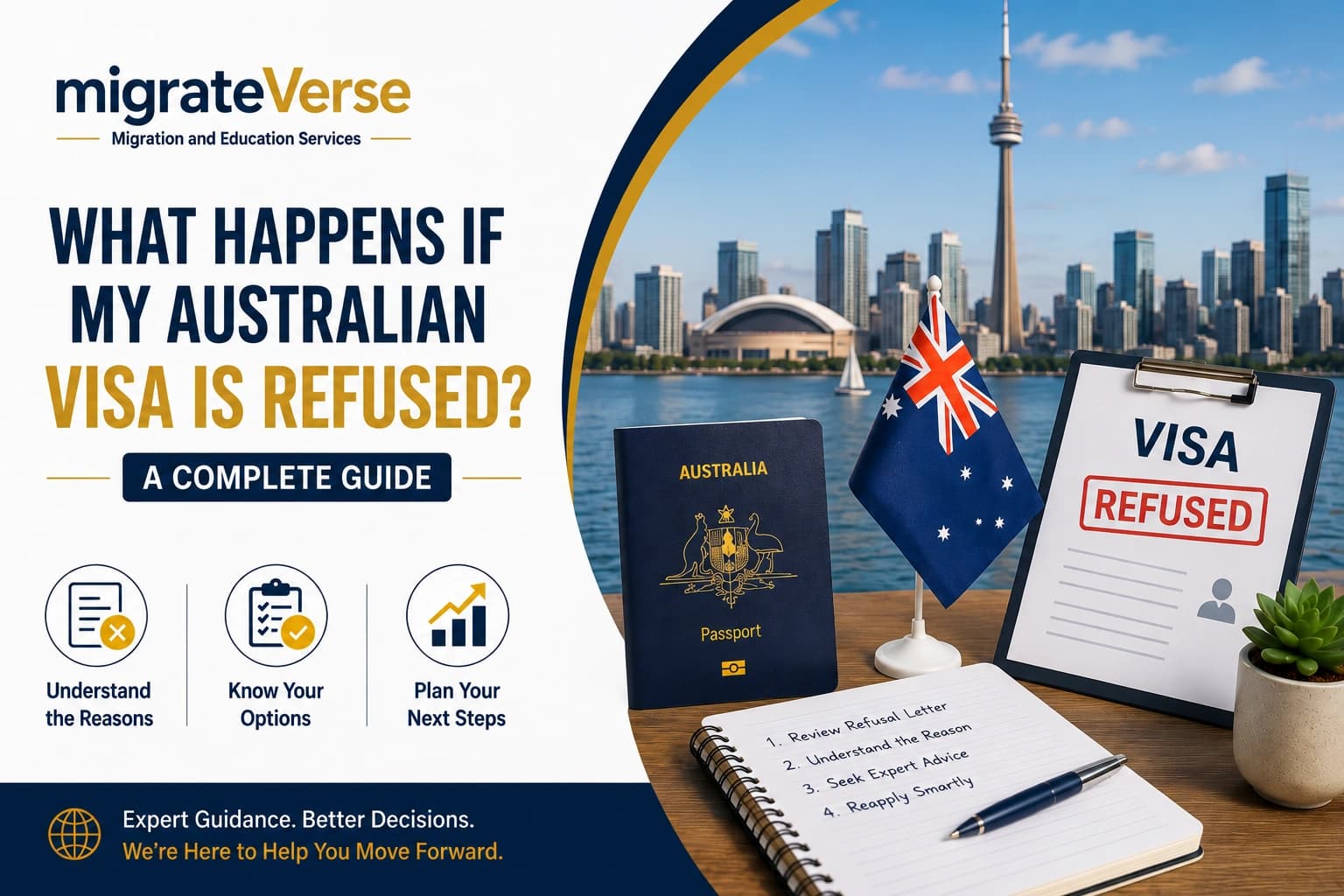
When an Australian visa is refused, it can feel like months of preparation have suddenly gone to waste. You may have already arranged documents, paid the application fee, planned your studies, work or move, and then received a refusal notification. It is frustrating, no doubt.
But an Australian visa refusal does not automatically mean you can never apply for Australia again. What happens next depends on the visa you applied for, the reason for refusal, your circumstances and whether you have a right to seek a review of the decision.
What Does an Australian Visa Refusal Mean?
An Australian visa refusal means that the Department of Home Affairs has decided that your application did not satisfy one or more requirements of the visa you applied for. The refusal itself does not necessarily mean that you are permanently barred from applying for another Australian visa. However, the reason behind the decision is extremely important.
For example, an applicant may have problems with eligibility, supporting documents, financial evidence, personal circumstances or other visa-specific requirements. Two people can receive a visa refusal for completely different reasons, even if they applied for the same visa. This is why simply searching for general information about visa refusal Australia cases may not tell you what applies to your situation. The refusal notification should be the starting point because it explains why the application was refused and, where applicable, whether the applicant has review rights.
What Should You Do After an Australian Visa Is Refused?
Read the Visa Refusal Letter Carefully
The first thing to do after receiving an Australian visa rejected decision is to read the refusal notification carefully. It can be tempting to immediately think about submitting another application, especially if your travel or study plans are time-sensitive. However, rushing into a second application without understanding the first refusal can create more problems.
Pay attention to the specific reasons given by the Department of Home Affairs and identify which visa requirements were considered unsatisfied. Also check whether the notification gives you a right to seek review and whether a deadline applies. A small detail in the refusal letter can make a big difference to what you should do next.
Understand the Actual Reason for Refusal
The reasons for Australia visa rejection depend on the visa category and the individual circumstances of the applicant. A student visa application may be assessed differently from a skilled migration, partner, visitor or employer-sponsored application. This means there is no single solution for every refusal.
Instead of asking only, “Why was my visa rejected?”, look more closely at what the decision-maker was concerned about. Was there insufficient evidence? Was a particular requirement not met? Was information inconsistent? Did the application fail to establish something required under the visa criteria? Once you understand the actual issue, it becomes much easier to consider your next step.
Can You Reapply After an Australian Visa Refusal?
Reapplying for an Australian Visa After Refusal
In many circumstances, reapplying for Australian visa after refusal is possible. However, submitting the same application again with almost exactly the same information is unlikely to solve the original problem. A new application should have a clear reason behind it and should properly address the concerns raised in the previous decision.
For instance, if the original application had weaknesses in supporting evidence, the new application should contain stronger and clearer evidence where appropriate. If the applicant's circumstances have changed, those changes should be properly documented. If there was an inconsistency in the original application, it should be understood and addressed rather than simply ignored.
This is particularly important because applying again also means spending more money and time. The visa application charge is generally not refunded simply because an application has been refused, so a rushed second application can become an expensive mistake.
Should You Appeal or Reapply After an Australian Visa Refusal?
When a Review May Be an Option
Whether you should seek a review or submit a fresh application depends on the refusal decision and the review rights attached to it. Some Australian visa refusal decisions can be reviewed by the Administrative Review Tribunal, while others cannot. Your refusal notification should tell you whether you have a right to review.
If review is available, pay close attention to the deadline. Missing the relevant time limit can seriously affect your options. A review is also different from simply submitting another visa application, so it is important to understand what the review process involves before deciding what to do.
When a New Visa Application May Be More Appropriate
A fresh application may be worth considering when your circumstances have materially changed or when you can properly address the issues that resulted in the original refusal. This could involve additional evidence, changed eligibility, improved documentation or consideration of another visa pathway.
There is no universal rule saying that every refused applicant should appeal or that everyone should reapply. The right approach depends on the individual case. Sometimes the better decision is to fix the underlying problem first instead of immediately submitting another application.
What Are the Common Reasons for Australia Visa Rejection?
Incomplete or Weak Supporting Evidence
One common issue is evidence that does not adequately support the information provided in the application. Documents may be missing, unclear, outdated or insufficient for the requirement being assessed. Simply uploading a large number of documents does not necessarily make an application stronger. The evidence needs to be relevant and support the claims being made.
Eligibility Problems
Another possibility is that the applicant does not satisfy one or more requirements of the particular visa. Every Australian visa has its own eligibility criteria, and meeting most of the requirements is not necessarily enough if an important mandatory criterion is not satisfied.
Inconsistent Information
Inconsistencies between forms, statements, documents and previous applications can also create concerns. Sometimes the difference may have an innocent explanation, but it still needs to be properly understood. Applicants should always make sure that the information in their application is accurate and consistent.
Financial or Personal Circumstances
For visas where financial circumstances, personal background or supporting evidence are relevant, unclear or insufficient information may affect the assessment. This is why applicants should not simply copy documents from another person's successful application and assume that the same approach will work for them.
What Happens to Your Visa Application Fee After Refusal?
Is the Visa Application Charge Refunded?
Many applicants wonder whether they will receive their money back after an Australian visa refusal. Generally, a visa application charge is not refunded simply because the application has been refused. This is another reason to carefully assess the situation before submitting a new application.
The cost is not limited to the application charge either. Applicants may also have spent money on English language tests, medical examinations, document preparation, translations and other requirements. Receiving a refusal after investing heavily in the process can therefore be particularly disappointing.
What If You Are Already in Australia When Your Visa Is Refused?
Check Your Current Visa Status
If you are already in Australia when a visa is refused, the situation can be more complicated. You should not assume that you can simply remain in Australia while deciding what to do. Your current visa, its conditions, expiry date and any review rights can all matter.
If you are in this position, check your current visa information and understand what the refusal means for your legal status. Where the situation is complicated or time-sensitive, getting professional immigration advice quickly can be much safer than waiting until the problem becomes urgent.
Can a Visa Refusal Affect Future Australian Visa Applications?
Does One Refusal Mean You Cannot Get an Australian Visa?
A previous refusal does not automatically mean that every future Australian visa application will be refused. However, you should take the previous decision seriously. When reapplying for Australian visa after refusal, the applicant should understand what happened previously and ensure that the new application properly addresses any relevant concerns.
Keeping the original refusal notification and supporting documents can be useful. They allow you to compare the previous application with the new one and identify what needs to be different. Pretending that the previous refusal never happened is generally not a sensible strategy.
How Can You Reduce the Risk of Another Visa Refusal?
Review Everything Before Applying Again
Before submitting another application, go through the previous refusal carefully and check every relevant requirement of the new application. Your documents should support the information you provide, and your circumstances should be presented accurately and consistently.
Get Professional Advice When the Case Is Complicated
Some applications are relatively straightforward, while others involve previous refusals, complicated personal circumstances, multiple visa applications or difficult eligibility questions. In those situations, speaking with a qualified Visa Consultant Australia applicants can trust may help you understand the available options before spending money on another application.
A professional assessment should focus on your actual circumstances rather than promising a guaranteed result. No genuine consultant can guarantee that an Australian visa will be approved.
What Should You Do Next After a Visa Refusal?
The most important thing is not to panic and immediately submit another application. First, read the refusal decision, understand the exact reason, check whether you have review rights and identify the deadline if one applies. Then compare your realistic options.
For some applicants, a review may be appropriate. For others, a fresh application may make more sense after correcting the problems in the original application. In some cases, another visa pathway may be worth considering altogether.
migrateVerse can help applicants understand their refusal, review the available options and prepare for the next stage based on their individual circumstances. The right next step is not always the quickest one. Sometimes taking a little extra time to understand what went wrong is what prevents the same mistake from happening again.
Frequently Asked Questions
What happens if my Australian visa is refused?
Can I reapply after my Australian visa is refused?
Can I appeal an Australian visa refusal?
Will I get my Australian visa application fee back?
Should I reapply or request a review after refusal?
Need Expert Migration Advice?
Our registered migration agents can help you navigate the complexities of Australian visa processes.