
Top Reasons Australian Citizenship Applications Get Rejected
Discover the top reasons Australian citizenship applications get rejected and learn how to avoid common mistakes, delays, and eligibility issues in 2026.
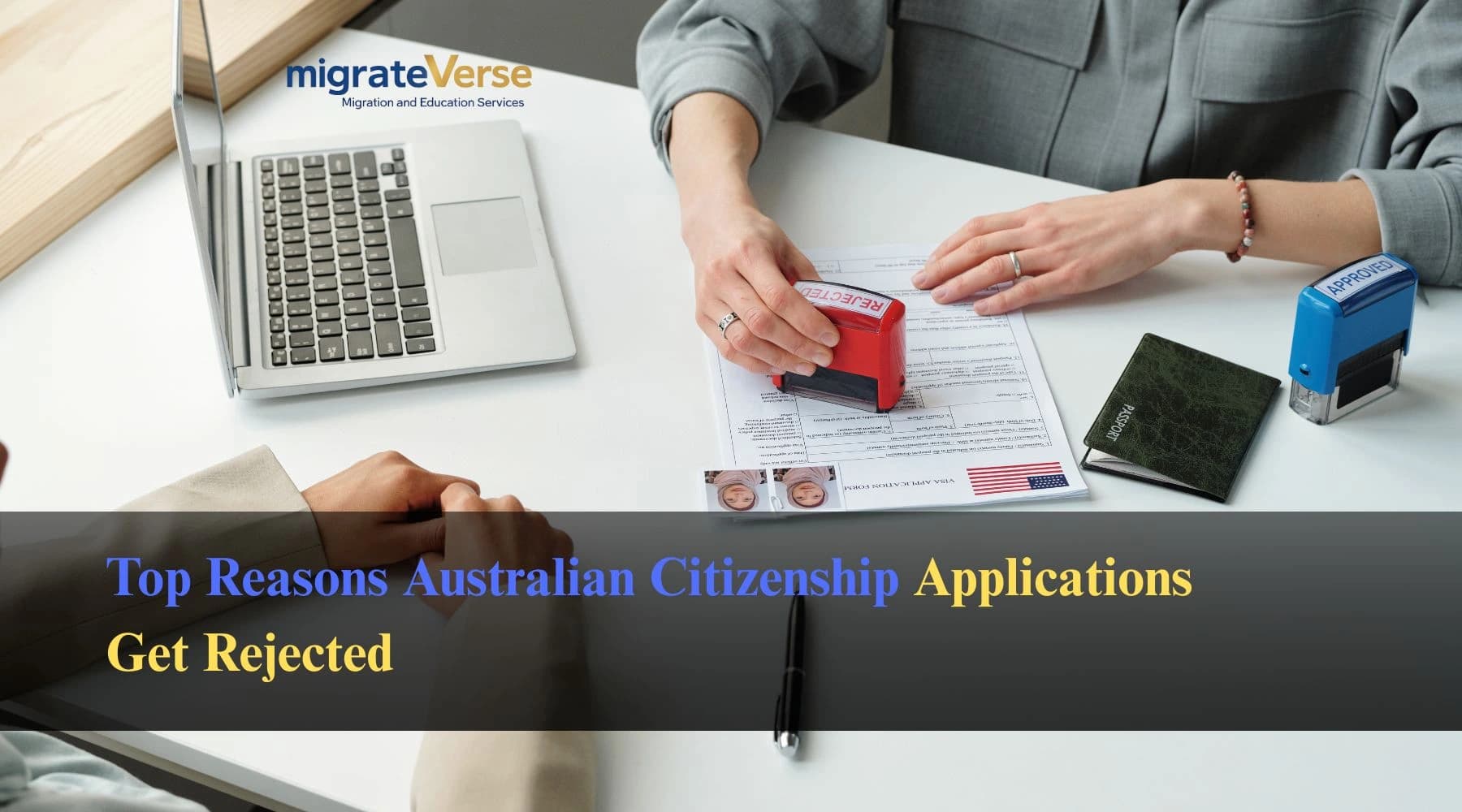
Every year, thousands of people approach the department of immigration and citizenship Australia with citizenship applications they genuinely believe are complete, accurate, and ready — and then the refusal comes. Sometimes it's expected.
Most of the time it's not. And the frustration that follows is real, because citizenship isn't just paperwork. It's years of your life, years of building something in Australia, suddenly put on hold because of something that might have been avoidable with the right guidance.
This blog isn't a doom-and-gloom piece. It's a practical one. Because the majority of citizenship application rejections come down to a handful of recurring issues — and most of them are fixable before you submit, not after.
Let's go through the real reasons applications fail.
1. Not Meeting the Residence Requirement — and Not Realising It
This one catches more people off guard than almost anything else. To be eligible for Australian citizenship by conferral, you generally need to have been lawfully present in Australia for four years immediately before applying — including at least twelve months as a permanent resident.
Sounds straightforward. It isn't.
The calculation is stricter than most people assume. Time spent outside Australia counts against you. Certain visa types don't count toward the residence period at all. And if you're even a few days short — genuinely, a handful of days — the application can be refused.
People make mistakes here because they eyeball it. They think "I've been here four years, roughly" without actually sitting down and calculating every trip, every absence, every day. That rough mental calculation is often wrong. Sometimes it's a little wrong. Sometimes it's significantly wrong.
If you're unsure about your residence period, don't guess. Get proper visa advice Australia before you lodge. It's one of the most common issues MigrateVerse sees with citizenship cases that come in after a refusal — applicants who were close to eligible but not quite there, and didn't know it until the letter arrived.
2. Character Concerns — Broader Than You Think
The character requirement for Australian citizenship isn't limited to serious criminal convictions. It's broader. More nuanced. And applicants often underestimate what it covers.
Obviously, convictions for serious offences are a problem. But the character test also considers things like pending charges, past visa cancellations, association with criminal groups, and conduct that raises questions about values alignment with Australian law and community standards.
The tricky part is that applicants are required to disclose relevant information. Failing to disclose something — even something that might not have automatically failed the application — can itself become the basis for a refusal.
Non-disclosure is treated as a serious integrity issue. Decision-makers notice it. It's not just "they found out about the thing" — it's "they found out you didn't tell them."
If there's anything in your history you're uncertain about, get advice before submitting. Seriously.
3. Identity Issues and Documentation Gaps
Australia's citizenship process involves thorough identity verification. And identity problems — discrepancies in names across documents, missing identity evidence, questions about the authenticity of documents provided — are a surprisingly common refusal ground.
This affects applicants from countries where naming conventions differ across documents, where records management is inconsistent, or where replacement documents were issued years ago under slightly different details. None of that is the applicant's "fault" in any meaningful sense. But it becomes their problem in the application.
The fix here is usually thorough preparation — understanding exactly what documents are required, ensuring consistency across them, and where there are genuine discrepancies, providing statutory declarations or supporting evidence that explains them before a decision-maker flags them as a concern.
4. English Language Requirement — Still Relevant
Australian citizenship requires a basic competence in English. Most long-term residents in Australia have this naturally. But it's still assessed — and for some applicants, particularly those who've been living in tight community networks where English wasn't their primary day-to-day language, it can be a genuine hurdle.
The test isn't academic-level English. But it's also not nothing. If there's any uncertainty about meeting this requirement, it's worth thinking about before lodging rather than hoping it goes unnoticed. It won't.
5. Incorrect or Incomplete Application Forms
This one is so boring it's almost embarrassing to include — and yet it's consistently one of the most common reasons applications get held up or refused.
Form errors. Missing sections. Incorrect dates. Questions answered in the wrong format. Attachments in the wrong file type. Required statutory declarations missing or unsigned.
The Department doesn't chase you to fix minor errors. They either return the application or — in some cases — make a decision based on what was submitted, which is rarely a good outcome when something important is missing.
The application form for Australian citizenship is not complicated in concept, but it is long, and the supporting documentation requirements are specific. A missed box or an incorrectly formatted attachment can genuinely derail an otherwise strong application.
A registered migration agent for Australia who works with citizenship applications regularly will have seen every version of these form errors. They know what the department looks for and what gets flagged. That kind of pattern recognition matters more than people give it credit for.
6. Questions About Genuine Intent to Reside
For some applicants — particularly those who have spent significant time overseas between getting permanent residency and applying for citizenship — the Department may question whether the applicant genuinely intends to reside in Australia after becoming a citizen.
This might seem like an unusual ground for refusal given how globally mobile modern life is. But it's real. If your residency record shows extensive overseas absences and the application doesn't clearly address why, that gap can attract scrutiny.
7. Minors in the Application — Often Forgotten, Frequently Problematic
When citizenship applications include dependent children, the requirements for those children need to be satisfied separately. Their residence period, their documentation, their circumstances — all of it matters individually.
It's one of those areas where applicants focus on their own eligibility and assume the children's section is just administrative detail. It isn't.
Applications with minor children have a higher rate of errors and omissions than adult-only applications, partly because people don't realise the children's portion is evaluated with the same rigour.
8. Gaps Between PR Grant and Application — Timing Matters More Than People Think
There's a common misconception that once you have permanent residency, the clock is running and citizenship is inevitable if you just wait it out. That's not quite right.
The four-year residence calculation runs from the date of application, looking backwards. If significant chunks of that four-year window were spent overseas — even legitimately, for work or family — those absences reduce your counted time in Australia.
Some applicants have had permanent residency for six, seven, eight years and still don't meet the residence requirement because of travel patterns.
This is genuinely one of the most misunderstood aspects of citizenship eligibility. MigrateVerse encounters it regularly with clients who assumed they were ready and weren't — not because they'd done anything wrong, but because the calculation is more technical than it appears.
9. Failure to Attend the Citizenship Test or Ceremony
Sounds obvious. But life happens, and some applications fail at the very last stage because the applicant missed a scheduled test appointment or citizenship ceremony and didn't notify the Department properly.
The test is compulsory for most adult applicants. The ceremony is the final step. Miss either without appropriate notice, and the application process can be significantly disrupted — sometimes to the point of needing to reapply.
10. Not Getting Professional Help and Paying for It Later
This is the honest one. The one people don't want to hear.
Australian citizenship by conferral sounds like a process you can navigate alone. And plenty of people do manage it.
But the refusal rate for citizenship applications that involved professional guidance is substantially lower than for self-lodged applications. That's not coincidence — it's the difference between knowing the rules in theory and understanding how the Department applies them in practice.
MigrateVerse has helped applicants who've come in after a refusal and needed to understand what went wrong, rebuild their case, and navigate the review process. The work is harder after a refusal than before one. The outcome is less certain. Getting things right the first time is almost always the better investment.
Citizenship is the end of a long migration journey for most people. It deserves the same care and attention that journey started with. If you're approaching the eligibility window, a proper review of your situation by a registered migration agent for Australia before you lodge is genuinely worth the time and cost.
Because once a refusal lands, the options narrow. Prevent that.
Frequently Asked Questions
How long does the Australian citizenship application process take?
Can I appeal an Australian citizenship refusal?
Does a criminal record automatically disqualify me from Australian citizenship?
Can I include my children in my citizenship application?
What is the Australian citizenship test and who needs to take it?
Need Expert Migration Advice?
Our registered migration agents can help you navigate the complexities of Australian visa processes.