
What Happens After Australian Citizenship Is Approved?
Learn what happens after Australian citizenship is approved, including the ceremony, citizenship certificate, passport and important next steps for new citizens.
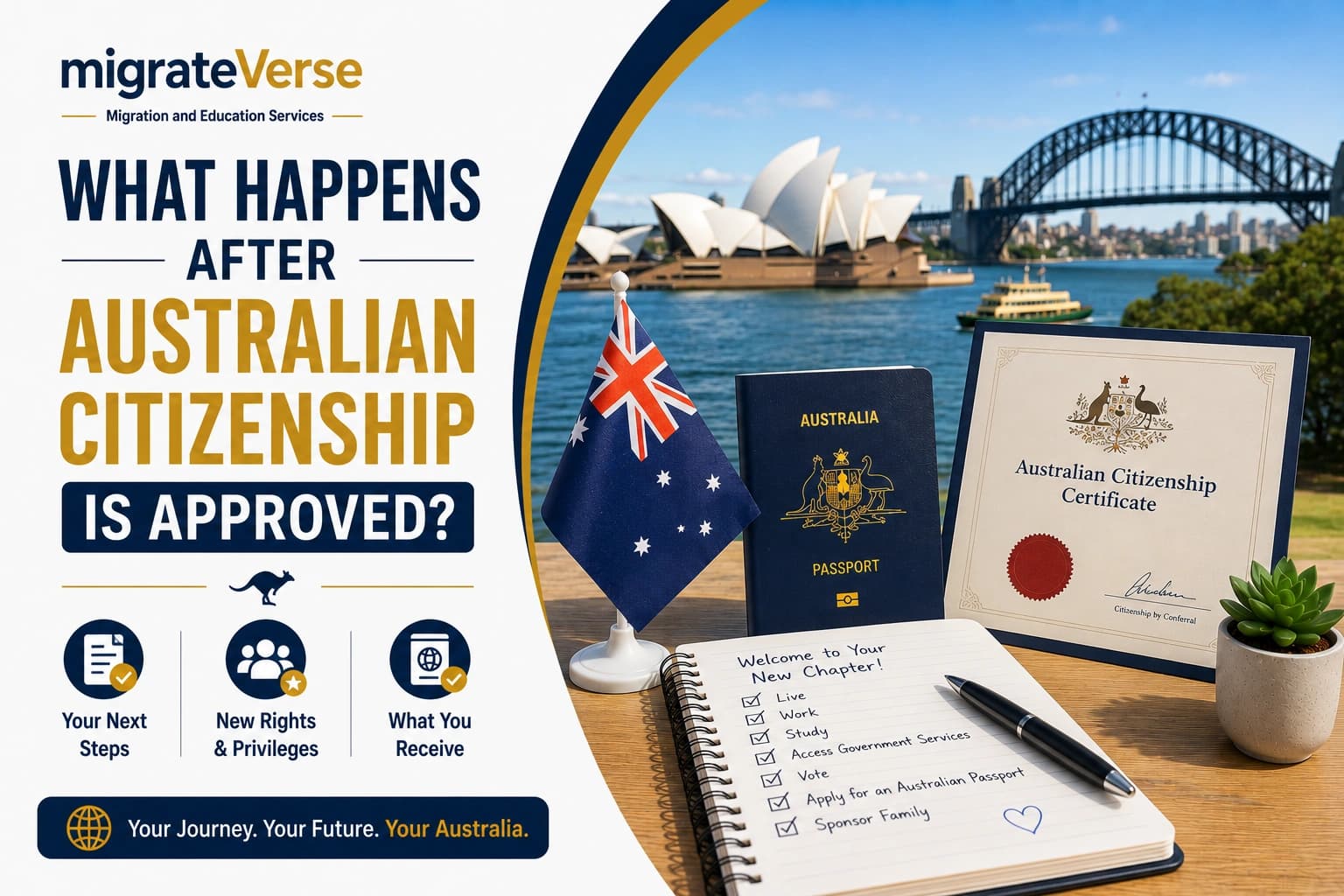
Wondering what happens after Australian citizenship is approved? Getting that approval letter can be a huge relief, especially after months of waiting, paperwork and appointments. But approval is not always the final step. For most people applying for citizenship by conferral, there is still a citizenship ceremony Australia applicants must attend before they officially become citizens. The next steps depend on your application type and whether you need to make the Australian Citizenship Pledge.
What Happens After Your Australian Citizenship Application Is Approved?
Once your Australian citizenship application is approved, the Department of Home Affairs will notify you in writing. If you are required to attend a ceremony, you will receive an invitation to attend one. For most applicants, making the Pledge of Commitment at the ceremony is the final legal step in becoming an Australian citizen.
This is the part that sometimes surprises people. An approval letter does not necessarily mean you can immediately apply for an Australian passport or start using citizenship as proof of status. You generally need to complete the required citizenship process first and receive evidence of your citizenship.
Do You Need to Attend an Australian Citizenship Ceremony?
Most Applicants Must Attend a Ceremony
For most people who become Australian citizens by conferral, attending a citizenship ceremony is required. The ceremony is where you make the Australian Citizenship Pledge, which is a public commitment to Australia and its people. Once you make the pledge, you become an Australian citizen.
The ceremony itself is usually fairly straightforward. You receive an invitation, attend at the nominated location and complete the formal citizenship process. It can be a surprisingly emotional day, especially after waiting so long for the application decision.
When Do You Receive the Ceremony Invitation?
If you need to attend a ceremony, Home Affairs states that you will generally receive an invitation letter about four weeks before the ceremony. However, the actual waiting time for a ceremony can vary depending on where you live and ceremony availability.
So, if your citizenship application has already been approved but you haven't received a ceremony invitation yet, don't automatically assume something has gone wrong. There can be a gap between approval and the ceremony.
What Happens at the Australian Citizenship Ceremony?
Making the Citizenship Pledge
The main purpose of the ceremony is making the Australian Citizenship Pledge. Most new citizens can choose between two versions of the pledge, including one that contains the words “under God” and one that does not. The pledge represents your commitment to Australia, its democratic beliefs, rights, liberties and laws.
Once you have made the pledge, you have completed the final step required for citizenship by conferral in most cases.
Receiving Your Citizenship Certificate
After making the pledge, you will receive your Australian citizenship certificate. This certificate is official evidence of your Australian citizenship and should be kept somewhere safe.
Take a moment to check the details when you receive it. Your name and date of birth should be correct. If there is an error, contact the Department as soon as possible rather than leaving it until you need the certificate for another application.
When Can You Apply for an Australian Passport?
Citizenship Certificate Comes First
One of the biggest questions people have after citizenship approval is, “Can I apply for my Australian passport now?”
You cannot apply for an Australian passport until your citizenship application has been approved and you have received evidence of Australian citizenship. For most people, this means completing the ceremony and receiving the citizenship certificate first.
After you have your citizenship evidence, you can apply for an Australian passport through the Australian Passport Office. Becoming a citizen and getting a passport are two separate processes, so don't confuse the two.
What Should You Do With Your Citizenship Certificate?
Keep It Safe
Your citizenship certificate is an important legal document. It proves that you are an Australian citizen and may be needed when applying for certain government services, documents or an Australian passport.
Home Affairs advises citizens to take care of the certificate and not alter it. Damaging or changing the document can create unnecessary problems later.
If you lose it or it becomes damaged, you may need to apply for evidence or replacement documentation. So yes, that little piece of paper is worth keeping somewhere safe.
Can You Travel After Australian Citizenship Is Approved?
What If You Need to Travel Before the Ceremony?
This is where timing matters. If you have been approved for citizenship but have not yet attended your ceremony, you may still need to travel using your current passport and visa arrangements. Home Affairs advises applicants who need to travel overseas to make sure they have a valid visa that allows them to return to Australia.
Receiving citizenship approval does not mean you should immediately assume your previous travel document or visa arrangements no longer matter. If you have an upcoming overseas trip, check your circumstances before leaving Australia.
What If You Receive a Ceremony Invitation While Overseas?
It is possible to receive a ceremony invitation for a date when you are outside Australia. Home Affairs notes that if this happens, a non-attendance letter may be issued and another invitation can be sent for a later ceremony. If you already know about upcoming international travel, keep your contact and travel information updated with the Department.
What Happens If You Do Not Need a Citizenship Ceremony?
Not everyone has to attend a ceremony. Certain applicants do not need to make the pledge at a ceremony and can become Australian citizens on the day their application is approved.
For those applicants, Home Affairs states that the citizenship approval letter and certificate will be posted to them. For example, certain children under 16 do not need to attend a ceremony.This is why it is important to check the approval letter rather than assuming every applicant follows exactly the same process.
What Should You Do After Becoming an Australian Citizen?
Apply for an Australian Passport
Once you have completed the citizenship process and received your citizenship evidence, you can consider applying for an Australian passport. The passport application is separate from the citizenship application, so you will need to follow the relevant passport requirements.
Update Your Government Records
After becoming a citizen, you may also need to update your status with organisations or government departments where your previous status as a permanent resident was recorded. Keep your citizenship certificate and passport details accessible when making these updates.
Check Your Enrolment to Vote
Australian citizens aged 18 or over must enrol to vote. Home Affairs provides information about enrolment through the Australian Electoral Commission, and new citizens receive information about this at the citizenship ceremony. This is one of those small administrative steps that is easy to forget after the excitement of the ceremony.
Does Citizenship Approval Cancel Your Previous Visa?
Once you become an Australian citizen, you are no longer dependent on a temporary or permanent visa to remain in Australia. However, the exact timing matters.
If you have only received approval but have not yet completed a required citizenship ceremony, don't assume you are already a citizen. For most applicants, citizenship is acquired when the pledge is made at the ceremony. This distinction is particularly important if you are planning overseas travel or dealing with visa conditions.
Can a Migration Professional Help After Citizenship Approval?
When Professional Guidance May Be Useful
Most straightforward citizenship approvals do not require a migration professional after approval. However, questions can arise when there are travel plans, changes in personal circumstances, delayed ceremony invitations, incorrect certificates or complicated immigration histories.
An Australia Visa Consultant may also be useful for people who are not yet citizens but are trying to understand how their current visa connects with future citizenship eligibility.
If you are still exploring Australia Visa Options & PR Pathways, migrateVerse can help you understand the broader migration process and determine which pathway may fit your circumstances.
Final Thoughts: What Happens Next?
Getting citizenship approval is a big milestone, but for most applicants it is not quite the finish line. The next major step is usually the citizenship ceremony, where you make the Pledge of Commitment and officially become an Australian citizen. After that, your citizenship certificate becomes important evidence of your new status, and you can move on to practical steps such as applying for an Australian passport and updating relevant records.
If you are waiting for your ceremony, keep an eye on your correspondence and make sure your contact details remain up to date. There is no need to panic just because the invitation doesn't arrive immediately.
For people who need help understanding their immigration journey before reaching citizenship, migrateVerse provides guidance on Australian visa pathways, permanent residency and citizenship-related processes.
And once that ceremony day finally arrives, enjoy it. After all the forms, documents and waiting, you have earned the moment.
Frequently Asked Questions
How long after citizenship approval is the ceremony?
Do I become an Australian citizen immediately after approval?
Can I apply for an Australian passport after approval?
What happens if my citizenship certificate has an error?
Can I travel overseas after citizenship approval?
Need Expert Migration Advice?
Our registered migration agents can help you navigate the complexities of Australian visa processes.