
Engineering Career in Australia 2026: High-Demand Jobs, Salaries & PR Pathways
Explore engineering career opportunities in Australia in 2026, including high-demand jobs, salary expectations, skilled migration pathways, and PR prospects for engineers.
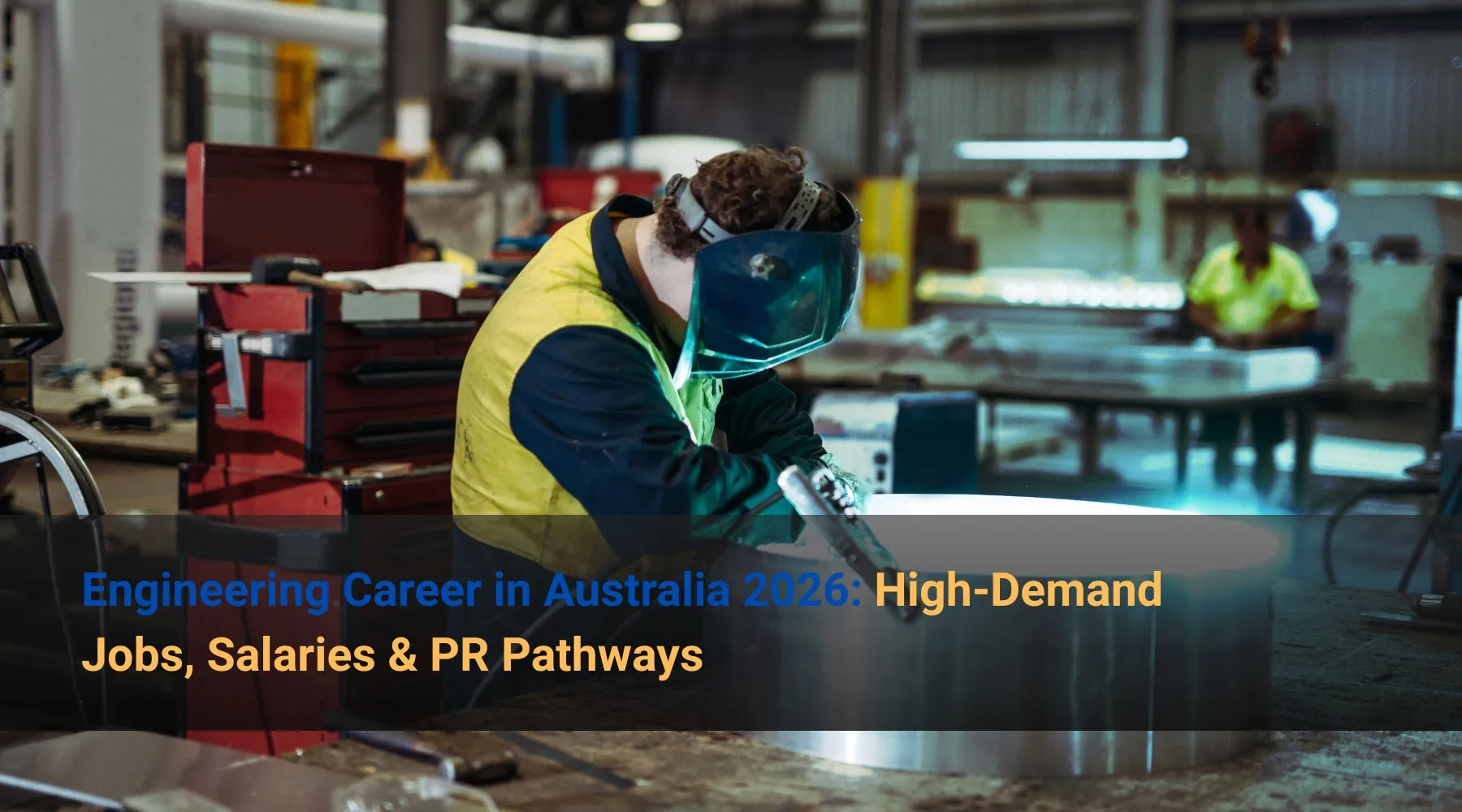
If you've been researching engineering courses in Australia and wondering whether the career outcomes actually justify the move — the honest answer, in 2026, is yes. More clearly than it's been in a while.
Australia's infrastructure pipeline is enormous, the clean energy transition is creating engineering demand that wasn't there five years ago, and the skills shortage in several engineering disciplines is real and documented, not just marketing copy from education consultants trying to fill enrolments.
But "engineering" covers a huge range of roles, qualifications, and salary outcomes. What's in demand in civil isn't the same as what's happening in electrical. What a diploma graduate can access is different from what a bachelor's degree holder qualifies for. And the PR pathway from engineering study isn't automatic — it requires planning from the very beginning, not something you piece together in your final semester.
So let's actually go through it properly.
The Engineering Jobs Market in Australia — What's Actually Moving in 2026
Australia has been running infrastructure deficits for years and is currently in the middle of a multi-decade catch-up. Major projects across road, rail, water, and energy infrastructure are underway or in planning across every state. The 2032 Brisbane Olympics preparation alone is keeping civil and structural engineers busy for the rest of this decade.
Beyond that, the renewable energy transition is creating demand that's genuinely new. Wind farm construction, solar installation at scale, battery storage infrastructure, hydrogen projects — these aren't speculative anymore. They're funded, they're contracted, and they need engineers who understand both the technical requirements and the regulatory environment.
What's actually in demand right now:
Civil engineers — roads, bridges, rail, water infrastructure. Consistently on the Skills Priority List. Strong across NSW, Victoria, Queensland, and WA.
Electrical engineers — energy sector specifically is very active. Grid modernisation, renewables integration, industrial electrical systems. High demand, strong salaries.
Mechanical engineers — mining and resources sector is the big driver here, particularly in Western Australia. Also manufacturing, defence, and increasingly advanced manufacturing for EV components.
Structural engineers — residential and commercial construction is cyclical but consistently needs structural engineering input. Major infrastructure projects add to this base.
Software/systems engineers — if you're considering engineering more broadly, this is the category with the deepest market. Not necessarily tied to the infrastructure boom but very strong independently.
Salaries — What Engineers Are Actually Earning
Let's be direct about numbers because vague salary ranges are useless for planning purposes.
Graduate engineers (0–2 years experience): AUD $65,000 – $85,000 depending on discipline and location. Mining and resources roles in WA tend to sit at the higher end of this range even for graduates.
Mid-level engineers (3–7 years experience): AUD $95,000 – $130,000. This is where discipline, specialisation, and location make a bigger difference. A mid-level electrical engineer in the energy sector in Queensland can be pushing $120k+.
Senior engineers (8+ years): AUD $130,000 – $180,000+. Project managers, principal engineers, and those with specialist qualifications can exceed this, particularly in mining, infrastructure project delivery, and defence.
These are base salaries. Superannuation (currently 11% employer contribution) sits on top. For roles in remote or regional locations — mining especially — site allowances and other loadings push total compensation significantly higher.
Cost of living varies enormously by city. Sydney and Melbourne are the most expensive. Adelaide, Brisbane, and Perth offer better value, and Perth in particular has a strong engineering market through the resources sector.
Engineering Courses in Australia: Understanding the Pathways
The qualification landscape in Australia matters for two reasons: it determines what roles you can access, and it affects your PR pathway. Getting this right at the enrolment stage changes your trajectory.
Bachelor of Engineering
The standard professional engineering qualification. Four years full-time. Accredited programs through Engineers Australia. Graduates are eligible to apply for professional membership with Engineers Australia, which is a critical step for the skills assessment process required in most PR pathways.
Key disciplines: Civil, Structural, Mechanical, Electrical, Chemical, Environmental, Mining. Course costs for international students typically range from AUD $35,000 – $50,000 per year.
Engineering Diploma Courses in Australia
Engineering diploma courses in Australia are an underrated entry point that a lot of prospective students overlook because they're fixated on the degree. The diploma route — typically a Diploma of Engineering or an Advanced Diploma — is shorter (one to two years), less expensive, and for some people is the right first step before transitioning into a degree.
Diploma graduates can access engineering technician and associate roles. They don't qualify for full professional engineer registration in Australia without additional study, but they can work in technical support, project coordination, and field roles while completing further qualifications. For people who are uncertain about a full four-year degree commitment, or who need to manage costs carefully, this is a legitimate and functional path.
MigrateVerse regularly advises students weighing up diploma versus degree pathways — because the right choice genuinely depends on your specific background, your target occupation, and how you're planning your PR timeline. There's no universal answer.
Master of Engineering
For people who already hold a bachelor's degree — either in engineering from their home country or in a related technical field — a Master of Engineering in Australia can provide both the Australian qualification and the Engineers Australia pathway for skills assessment. Typically one to two years. More targeted than a second bachelor's degree for experienced candidates.
Education Courses in Australia: Picking the Right Institution
When people talk about education courses in Australia for engineering, the institution matters more than some students realise — specifically because Engineers Australia accreditation of the program is essential for professional membership and skills assessment.
Always check: is the specific program you're considering accredited by Engineers Australia at the Washington Accord level (for bachelor's degrees) or Sydney Accord level (for diplomas)? The program name can sound right and still not carry the accreditation you need.
Top universities for engineering in Australia include the University of Melbourne, University of Sydney, UNSW, Monash, University of Queensland, and Curtin (particularly for mining and resources). TAFEs and private RTOs for diploma-level programs vary more in quality — accreditation verification matters even more at that level.
The PR Pathway From Engineering — How It Actually Works
This is the part that most students want to understand upfront, which is exactly right. Because the PR pathway isn't automatic, and the decisions you make during study affect your eligibility options after graduation.
The general flow for most international engineering graduates:
Step 1: Complete an accredited engineering qualification in Australia.
Step 2: Apply for a Temporary Graduate visa (subclass 485). This gives you 2–4 years (sometimes more depending on qualification level and study location) of work rights in Australia after graduation. This is your window to build experience.
Step 3: Get a skills assessment through Engineers Australia. This requires demonstrating that your qualification meets the competency standard for your nominated engineering occupation. For Australian accredited degrees, this process is more streamlined than for overseas qualifications.
Step 4: Apply for a skilled migration visa. The main pathways are the Skilled Independent visa (subclass 189), the Skilled Nominated visa (subclass 190, requiring state nomination), or the Skilled Work Regional visa (subclass 491, for regional locations). Points are calculated based on age, English proficiency, years of work experience, qualification level, and other factors.
Engineering occupations score well in the points test and appear on both national and state occupation lists — though exactly which occupations are on which lists changes, sometimes annually.
MigrateVerse helps engineering students and graduates map this pathway from the beginning — not just the visa application at the end. Because which state you study in, whether you choose regional versus metro, and what occupation you nominate in your skills assessment all affect your points score and nomination eligibility in ways that aren't obvious until you've gone through the detail.
State-by-State: Where Engineering Demand Is Strongest
New South Wales (Sydney): Significant infrastructure pipeline — Western Sydney Airport, Sydney Metro expansion, major motorway projects. Strong civil and structural market.
Victoria (Melbourne): Metro Tunnel, North East Link, ongoing major rail and road projects. Civil, structural, and systems engineering active.
Queensland (Brisbane): Olympics 2032 infrastructure preparation plus renewable energy projects. Active market across multiple disciplines.
Western Australia (Perth): Resources and mining sector drives the WA engineering market in a way that's genuinely different from the east coast. Mechanical and mining engineers, in particular, have strong employment and salary outcomes here.
South Australia (Adelaide): Defence manufacturing and shipbuilding are creating specific engineering demand — particularly naval and defence engineering roles — that SA has been actively promoting for skilled migration.
Regional areas — particularly in NSW, Queensland, and WA — offer additional PR pathway advantages through the regional visa streams, which is worth knowing about before deciding where to study or work.
What MigrateVerse Recommends Getting Right Early
The students who end up with the strongest PR outcomes from an engineering pathway in Australia are almost always the ones who thought about the end goal before they started.
Specifically: which occupation code will you nominate for your skills assessment? Is your target occupation on the relevant state nomination list? Does your course give you the accreditation you need for that assessment pathway?
These questions have specific answers, and getting them right before enrolment — not after graduation — is the difference between a smooth PR pathway and a complicated scramble.
MigrateVerse offers pre-enrolment pathway assessments for exactly this reason. Because the education and migration decisions are connected, and treating them separately usually leads to problems down the track.
Frequently Asked Questions
Which engineering disciplines have the best PR pathway in Australia in 2026?
How long does it take to get PR in Australia as an international engineering graduate?
Are engineering diploma courses in Australia enough for PR eligibility?
Do I need Engineers Australia membership to apply for PR in Australia?
What is the difference between a subclass 189 and 190 visa for engineers?
Need Expert Migration Advice?
Our registered migration agents can help you navigate the complexities of Australian visa processes.